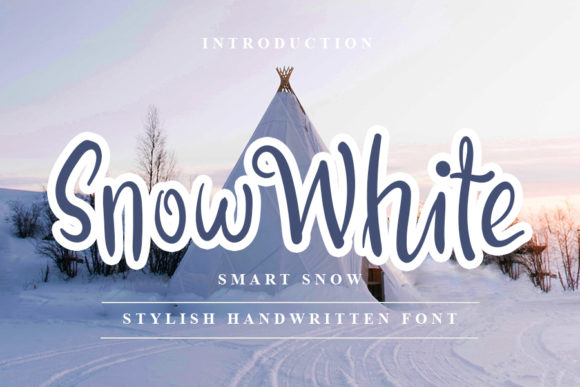
The Magic of Snow White: A Font That Brings Stories to Life
In the world of typography, fonts are more than just tools for writing; they are vessels of emotion, tone, and story. Among the myriad of typefaces available, one stands out for its particular charm and warmth: Snow White. This isn't a font about a fairy tale princess, but rather a digital typeface designed to evoke the same sense of wonder, romance, and elegance. It is a friendly, fresh, rich, and elegant handwritten font that has found a special home in the hearts of creators, particularly those working on greeting cards and crafting projects. Understanding this font, its purpose, and its application opens up a new dimension in digital creativity, blending traditional artistry with modern technology.
What Exactly is Snow White Font?
At its core, Snow White is a script font. This means it mimics the natural, flowing strokes of handwriting. Unlike rigid, geometric sans-serif fonts or formal serif fonts, script fonts like Snow White are designed to feel personal and organic. The specific characteristics of Snow White are carefully curated: its letters are "friendly" with open, inviting shapes; "fresh" with a crisp, uncluttered appearance; "rich" in its detailed curves and swashes; and "elegant" in its overall refined posture. It strikes a delicate balance—it is clearly crafted by hand, yet perfectly uniform for digital use. This makes it exceptionally versatile, capable of conveying both playful joy and sophisticated romance.
From Digital File to Crafted Emotion: The Purpose of Snow White
The primary purpose of Snow White, and fonts like it, is to bridge the gap between the impersonal digital world and the warmth of human touch. In an age where communication is often rapid and text-based, the choice of a font like Snow White injects personality and care into a message. Its significance lies in its ability to:
- Establish Tone: Immediately set a romantic, festive, celebratory, or heartfelt mood.
- Enhance Authenticity: Give digital projects a handmade, artisan feel without requiring physical calligraphy skills.
- Guide Visual Hierarchy: Its distinct style naturally draws the eye, making it perfect for headlines, quotes, and focal points.
- Evoke Nostalgia and Joy: The handwritten style often connects viewers with positive memories of personal notes and cards.
In practical terms, this transforms a simple text into a design element. The words "Happy Birthday" typed in a standard font are just information. The same words rendered in Snow White become a decorative, emotional gift unto themselves.
The Practical Relevance of Snow White in Modern Creativity
Snow White fits seamlessly into various facets of modern life, particularly where personal expression and creativity are valued. Its application extends far beyond just "making text look nice."
In Crafting and Greeting Cards
This is the font's ideal domain. The handmade card industry, both for hobbyists and small businesses, relies heavily on fonts that can emulate craft. Snow White is ideal for greeting cards for anniversaries, weddings, Valentine's Day, Christmas, and birthdays. Crafters use it in digital design software (like Canva, Adobe Illustrator, or even word processors) to create:
- Card titles and messages.
- Decorative quotes for scrapbook pages.
- Vinyl cutouts for personalized mugs and signs.
- Embroidery patterns via font-to-stitch software.
It allows anyone to produce work that looks professionally calligraphed, elevating homemade projects to a marketable level.
In Digital Design and Social Media
For bloggers, social media influencers, and small online businesses, visual branding is crucial. Snow White can serve as a secondary or accent font in logos, website headers, Instagram graphic templates, and Pinterest pins. It adds a layer of personal brand identity, suggesting a business that is caring, artistic, and detail-oriented—perfect for brands in niches like wedding planning, boutique gifts, artisan foods, or lifestyle coaching.
In Education and Personal Projects
Teachers creating engaging worksheets or classroom decorations might use it for headings to make materials more inviting. Individuals use it for personal projects like customizing party invitations, creating family recipe books, or designing meaningful photo album captions. It democratizes beautiful typography, making it accessible for non-designers.
Clarifying Common Misunderstandings
When exploring fonts like Snow White, a few assumptions often need addressing.
- "It's Just for 'Feminine' or 'Childish' Projects." While its elegance leans romantic, Snow White's versatility means it can be used for any project requiring a touch of class and warmth. A craft beer label using a rustic design could employ Snow White for a brewery's founding date script, adding a personal historical touch.
- "Handwritten Fonts Are Hard to Read." A well-designed script font like Snow White prioritizes legibility. Its letters are clear and spaced appropriately for body text when used in shorter phrases. It's not meant for long paragraphs, but for highlights, it is perfectly readable.
- "Using It Makes My Work Look Unprofessional." On the contrary, using a font appropriately signals design awareness. The "unprofessional" look comes from misuse—like using too many fonts together or using a script font for all text. Snow White, when used as a purposeful accent, increases perceived quality.
Building a Broader Understanding: Fonts as Emotional Tools
Understanding Snow White is a gateway to appreciating typography's broader role. Fonts are a fundamental part of visual communication. They work silently, influencing how we feel about information before we even read it. A technical manual uses a clean, sans-serif font to signal efficiency and clarity. A historical novel might use a serif font to tradition and authority. Snow White, and the genre of friendly script fonts, occupies the space of personal connection and crafted emotion.
In technology, the existence and popularity of such fonts highlight a fascinating trend: as we become more digital, we crave more analog warmth. Design software and font libraries are essentially vast digital crafting kits. Snow White is one of the most charming tools in that kit. Its relevance in daily activities—from making a card for a friend to branding a small online shop—shows that technology and human emotion are not opposites; they can be beautifully intertwined through thoughtful design choices.
Examples in Action
To see its application naturally, consider these scenarios:
- A small business owner creating a "Thank You" note to include with each online order. Using Snow White for the phrase "Thank You" at the top makes the note feel personally signed, not mass-produced.
- A couple designing their own wedding invitations. Using Snow White for their names and the date adds a layer of personal, romantic storytelling to the formal event details.
- A parent making a "Lost Tooth" certificate for their child. The playful elegance of Snow White turns a silly moment into a keepsake that feels special and official.
In each case, the font doesn't just display words; it enhances the narrative of the project.
Conclusion: A Font for Storytelling
Snow White font is more than a collection of letters. It is a design resource that embodies warmth, celebration, and personal touch. From its foundational role as a friendly handwritten script to its practical significance in modern crafting, design, and personal expression, it serves as a key tool for anyone looking to add emotional resonance to their words. By understanding its purpose and clearing up common misconceptions, users can harness its power effectively, whether they are beginners making a first greeting card or experienced designers looking for the perfect accent typeface. In the end, Snow White reminds us that in our digital world, the human hand—and the heart—still have a crucial place, beautifully rendered in every elegant curve and fresh stroke of its design.